Starting to teach CPR changes how you look at gear. You stop asking which product looks impressive and start asking what holds up after the thirtieth class, what works when a zipper breaks in a school gym, and what keeps learners engaged enough to hit the performance benchmarks. CPR instructor packages in Canada range from bare essentials to advanced bundles with feedback tech, AED simulators, and ready stock of consumables. The right choice depends on your teaching environment, class size, and the certification pathway you support.
This guide compares typical Canadian packages and the decisions behind them. It draws on practical experience in community halls, corporate boardrooms, and northern teaching trips where your kit lives in a pickup bed at minus 20. I will point out trade offs, list realistic price ranges in Canadian dollars, and flag the places where buying a cheaper box costs more over three years.
Who these packages serve in the Canadian landscape
New instructors usually align with one of the major training organizations, most commonly the Canadian Red Cross, Heart and Stroke Foundation of Canada, the Lifesaving Society, or St. John Ambulance. Each has its own instructor pathway and course outlines, yet the core skill set is the same. You will deliver compressions on adult and often child manikins, ventilations if your program includes rescue breathing, AED use, and first aid segments like bleeding control and recovery position.
The packages sold by Canadian distributors tend to mirror this. A starter bundle covers CPR only, while a more complete package folds in first aid scenarios. When comparing, make sure the kit actually fits the courses you plan to run. Some instructors begin with CPR A or C, then add Standard First Aid modules months later. There is no prize for hauling a car full of splints and triangular bandages to a one hour AED demo.
What typically comes in a Canadian CPR instructor package
The core components rarely change, but their quality, quantity, and feedback features vary a lot.
Adult manikins are non negotiable. In Canada, you will see Prestan, Laerdal, and Brayden models most often. Adult torsos form the backbone of practice. Many packages add child manikins, sometimes infant ones, and in bilingual settings you may benefit from models with icon based, not text based, prompts.
AED trainers simulate pads application and analyze rhythms without delivering shocks. Common choices include the Prestan AED UltraTrainer, Defibtech trainer units, ZOLL AED Plus Trainer2, and HeartSine trainer units. For public and corporate classes, pick a trainer that looks and sounds like the client’s real AED brand when you can, but ensure the Canadian distributor stocks pads and remote controls.
Consumables include lung bags for manikins that use them, face shields or valves for rescue breaths, nitrile gloves, alcohol wipes, and replacement AED training pads. A CPR and first aid training kit component often rounds out the package with bandages, roller gauze, triangular slings, and a tourniquet for hemorrhage control practice.
Transport and storage matter more than people expect. Rolling soft cases survive stairs and snowbanks better than hard cases, while hard shells protect electronics in airline baggage. For instructors crossing provinces or flying into northern communities, a case with lockable zippers saves time at check in.
Feedback tools lift skill retention. Lighted chest recoil indicators, compression depth clicks, and metronomes are worth their weight. Bluetooth app based feedback is useful for larger groups Medical simulation equipment Canada but needs battery discipline. Be wary of beautiful dashboards that require phones on every manikin. In community centers with spotty Wi Fi, simple auditory clicks win.
Price tiers you will actually see
Distributors rarely publish identical packages, but the pattern is consistent. The numbers here reflect ranges I have seen in Canada in the last few years. Expect modest inflation and supply chain bumps.
Entry tier, roughly 900 to 1,600 CAD. Typically two adult CPR training manikins, one AED trainer, a small supply of face shields, and minimal first aid gear. Good for micro classes and private instruction. Weaknesses include limited throughput, no child manikin, and no spare AED pads.
Mid tier, roughly 1,800 to 3,200 CAD. Often three to four adult manikins, sometimes one child or infant, one or two AED trainers with spare pads, a bag with PPE and basic first aid items, and at least one model with audible depth feedback. This is where many new instructors land. You can handle groups of 8 to 12 without recycling manikins mid skill station.
Advanced tier, roughly 3,500 to 6,000 CAD. Four to six manikins across adult, child, and infant, multiple AED trainers that mimic common public units, robust feedback tech, a full CPR and first aid training kit, rugged cases, and consumables for the first dozen classes. Best for instructors planning corporate on site training, union safety programs, or multi day Standard First Aid courses.
Above 6,000 CAD, you move into specialty territory. High fidelity manikins, integrated software analytics, and simulation gear for advanced scenarios. These fit post secondary or paramedic program labs more than community CPR.
CPR training manikins in Canada, and the real differences
If you buy a package for Canada, you will be offered at least two of the big three brands.
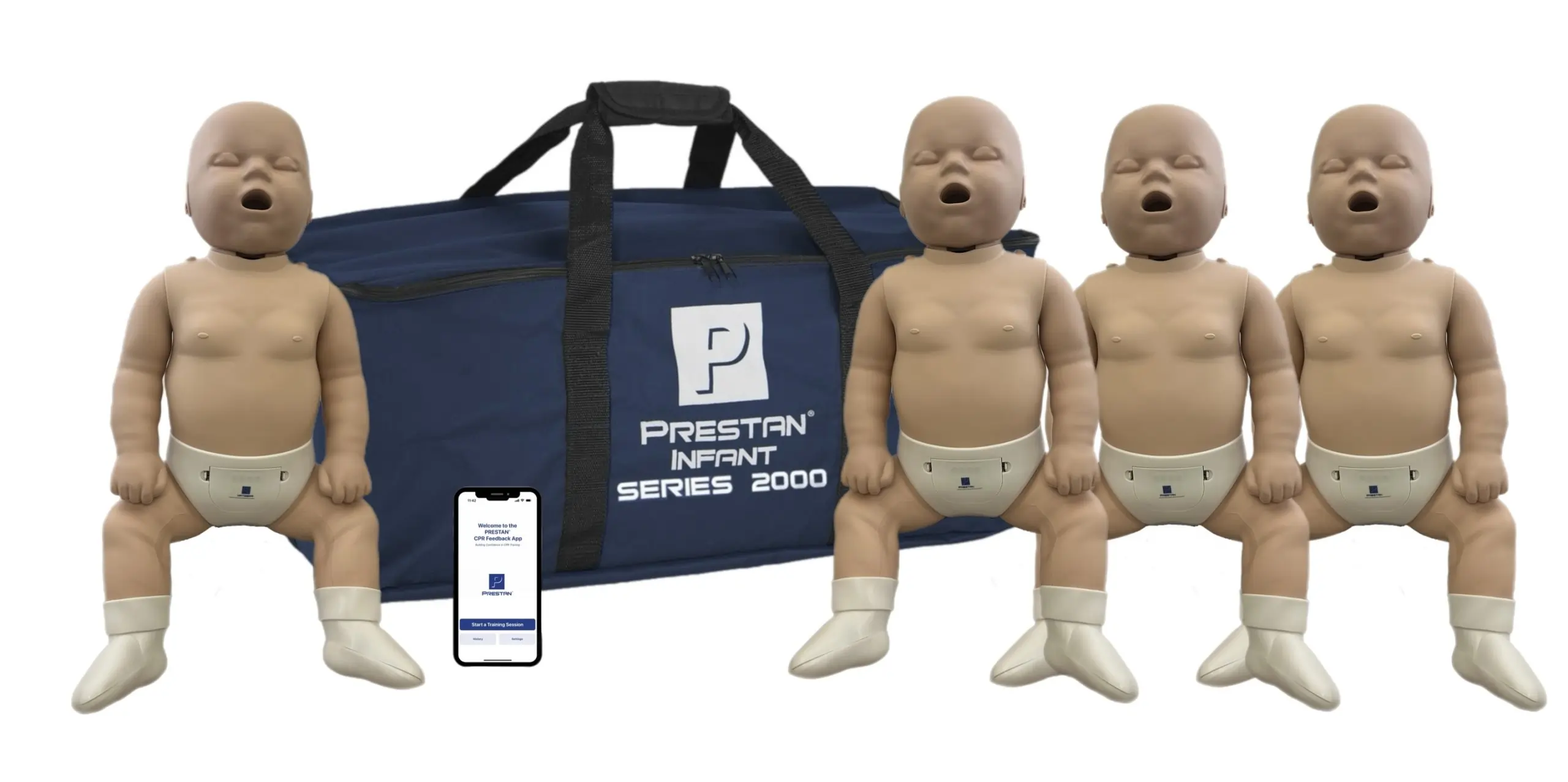
Prestan manikins are widely used in community programs. They pack four to a case, are light, and have visible chest rise with breaths when configured properly. The signature feature is a rate monitor with colored LEDs that guide compression rate. Replacement lung bags and face shields are easy to source across Canada, and the torsos tolerate a life of being tossed into trunks.
Laerdal’s Little Anne line feels closest to a human chest in my view, with consistent recoil and durable skins. The QCPR editions add Bluetooth feedback to a mobile app. This shines in larger classes if you assign one screen per station, not per student. Replacement parts cost a bit more, but their longevity balances that.
Brayden manikins bring visual feedback lights across the chest to show blood flow when compressions are effective. In dim classrooms, this engages learners far better than a spoken prompt. One caution, spare parts are available in Canada but may require ordering through fewer distributors, so plan your maintenance cycle.
For child and infant models, match your course requirements. If you teach CPR C or BLS, you will need infant models with realistic head tilt lift and mask fit practice. I have seen the biggest instructor frustration when masks do not seal on budget infant faces, leading to demoralizing practice sessions. Test the model with the masks you will actually use.
Beyond features, think about cleaning. During and after COVID, many programs adopted single use face shields or valves. If your package includes reusable lungs, set a clear post class workflow. Alcohol wipes degrade some plastics and turn chest skins tacky. Mild soap on skins, isopropyl alcohol on hard surfaces, and a dry time before re packing will double the life of your fleet.
AED training equipment in Canada, what matters more than the brand name
There is no Canadian standard for AED trainers like there is for live AEDs with CSA marks, but local support still matters. Pick AED training equipment Canada distributors can service. Trainers with hardwired cables last longer than detachable leads that walk away. Remote controls are often lost within a few months. If your package includes two trainers, keep one remote sealed as a spare.
Volume and clarity affect pass rates. Some AED trainers have soft speakers that become inaudible in a gym with HVAC noise. I bring a compact Bluetooth speaker as a backup, but that only helps if your unit has an audio out, which many do not. When you demo, ensure the prompts are understandable for learners with English or French as an additional language.
Pad adhesion and reusability save money. Trainers with pads that survive 80 to 120 applications lower your per class cost. In winter, cold rooms reduce pad stickiness. Warm pads in an inside pocket before class. Also, check whether your trainer accepts child pad modes. Corporate clients often ask about pediatric settings even if you do not train child CPR that day.
Some instructors match trainer models to the local public access AED network. For example, if a facility uses ZOLL AED Plus, a trainer with similar pad layout lowers cognitive load. This is nice to have, not essential. Skills transfer across brands if you teach the algorithm and pad placement landmarks well.
What a new instructor actually needs on day one
Here is a compact starter set that has proven workable for first classes of 6 to 10 learners. You can add depth later as your schedule fills.
- Three adult CPR training manikins Canada distributors can support with parts, plus one infant if you teach CPR C One AED trainer with spare pads, a carry case, and fresh batteries stored outside the unit A compact CPR and first aid training kit with bandages, triangular slings, a windlass tourniquet, and practice epinephrine trainer if allowed by your program PPE and consumables, including gloves sized small to XL, 50 to 100 face shields or a box of valves, disinfectant wipes, and extra lung bags if your manikins use them A durable rolling bag or case, painter’s tape for floor markers, and laminated skill checklists in English and French
This is the first of the two allowed lists.
Comparing package value by throughput, not by item count
Vendors often market packages by the number of pieces inside. That does not tell you how many students you can train without downtime. Throughput is a better lens. A class of 12 with three adult manikins works, but it slows. Learners wait, skills decay between rotations, and your debrief time shrinks. Four adult torsos to 12 learners is my comfort point. If your budget allows, buy for the highest tempo class you plan to run, not the smallest.
Consumables drive throughput too. If your package ships with only 10 face shields and thin gloves that rip, your second class becomes a scavenger hunt. For community programs, budget 10 to 15 face shields per 12 learners when practicing breaths, plus 1 to 2 extra valves if you use pocket masks in stations. Lung bags come in bundles of 50 to 100. Keep one sealed as reserve.
AED trainer pads are the silent bottleneck. Once the gel loses tack, learners start taping pads to chests. That wastes time and teaches bad habits. In my kits, each AED trainer travels with two unopened pad sets and one in use. I replace opened sets when they lose adhesion or the lead wires show cracking.
Durability, warranty, and the Canadian winter test
Warranty terms look similar on paper, commonly two to three years for manikins and one year for AED trainers. The difference emerges in shipping support and turnaround time. Before buying, ask the distributor how they handle a chest clicker that fails mid season. Do they ship a loaner, or are you grounded while a unit travels for repair. In Canada, I favor vendors with a west and an east warehouse. It shaves a week off transit when weather snarls deliveries.
Cold and heat are harder on plastic than advertised. Leaving your kit in a trunk during a February cold snap or an August heat wave shortens life. Skins harden at low temperatures and tear when you start compressions. Electronics glitch in heat. If you teach on the road, bring your manikins indoors the night before. If you cannot, at least plan 30 minutes for warm up before class.
Zippers and wheels are failure points. Soft cases with metal tooth zippers last longer than plastic ones. Wheels without exposed screws roll better on salted sidewalks. These small details matter more than you think once you are booking three classes a week.
Bilingual materials and accessibility
Across Canada, bilingual manuals, face cards, and AED prompts increase reach. If your clients include federal agencies or Quebec based firms, bilingual packaging is not just a courtesy. It is expected. Several CPR instructor packages Canada distributors offer bilingual skill sheets and AED trainer voice packs. Confirm before purchase. Retrofitting later is possible but pricier.
For accessibility, consider manikins with clearer recoil feedback for learners with low vision. Keep high contrast tape to mark pad placement landmarks. If you use videos, caption them. In one municipal course, captions lifted comprehension for a mixed language group without slowing the session.
How first aid components shift the package choice
If you intend to deliver Emergency First Aid or Standard First Aid, your package should expand. A CPR only kit leaves you short on realistic scenarios. You need a few splints that tolerate repeated use, tourniquets that feel close to clinical devices, and enough gauze to stage more than one bleed control exercise at a time.
A well built CPR and first aid training kit saves embarrassment. Trainees notice when elastic bandages lose stretch or when triangular bandages tear on the first fold. Buy cloth triangles, not paper like ones. Practice tourniquets should mimic windlass tension. Foam SAM splints outlast wooden ones and travel well.
I keep moulage simple. A reusable bleed control sleeve and a bottle of washable fake blood shift a routine scenario into memorable territory. That said, confirm with your venue. I have spent a lunch break cleaning red droplets from a church basement floor after an enthusiastic role play.
Logistics that make or break a first season
Time and space ruin more classes than gear failure. Negotiate room setup in advance. You need a clean floor patch large enough for stations, power outlets if you run any screens, and a table off to the side for first aid supplies. If the venue uses brittle vinyl tiles, bring yoga mats to protect manikin skins. If space is tight, arrange alternating stations to cut elbow collisions.
Plan a cleaning line. Post class, line up manikins, pop heads, remove lungs, and sort waste. Bag used lungs separately. Disinfect hard surfaces and let them dry before re assembly. In a rush, people pack damp components, which breeds odours. Ten extra minutes here saves an hour of scrubbing later.
For travel, a laminated inventory card taped inside your case pays off. New instructors often underestimate how often single items go missing. The second time you arrive without the AED high fidelity medical simulation Canada trainer remote, you will make an inventory card.
Digital tools without the tech headache
Apps that show compression depth and rate are genuinely useful. They are most effective when you designate one tablet per station instead of asking learners to use personal phones. Notifications and lock screens interrupt practice at the worst times. A dedicated low cost tablet with the app preloaded removes friction.
If you run recurring classes for the same client, a lightweight learning management system or even a shared spreadsheet to track attendance and certification dates keeps renewals on schedule. Some Canadian training partners offer portals that integrate instructor session data with their certification systems. That convenience can nudge you toward their ecosystem, so include it in your package comparison.
Total cost of ownership over three years
Sticker price is only part of the decision. Instructors who plan ahead look at a three year window that includes consumables, replacement pads, and shipping.
A sample calculation for a mid tier setup: four adult manikins, one infant, two AED trainers, and moderate first aid gear. Initial outlay, say 2,600 to 3,000 CAD. Annual consumables for 20 classes of 12, roughly 240 learners, might be 200 to 450 CAD for face shields and valves, 150 to 300 CAD for lung bags if applicable, and 120 to 240 CAD for AED trainer pads. Add 50 to 150 CAD for wipes and gloves. Over three years, you add 1,500 to 3,000 CAD in supplies. Factor in shipping, 15 to 25 CAD per order on average, higher for remote communities.
Repairs and replacements vary. Expect at least one manikin skin or spring replacement, 60 to 120 CAD, and an AED trainer pad cable set at some point, 60 to 100 CAD. If you budget 300 CAD per year for wear and tear, surprises hurt less.
When you spread those numbers across learners, your gear cost lands in the range of 5 to 10 CAD per student over three years. That is a healthy margin when you price courses realistically.
Where to buy and what to ask a Canadian distributor
Several national and regional suppliers serve this space. Without endorsing a single name, here is how I screen them. I look for clear stock levels on CPR training manikins Canada wide, honest lead times, and published parts catalogs. I ask if they carry AED training equipment Canada branches can ship from both east and west. I ask about bilingual materials, battery types required, and service turnaround.
Ask about package customization. Swapping a child manikin for an extra adult often costs little and fits your course mix better. Push for spare AED pads in the box, not as a second shipment. For Emergency training equipment Canada specific to first aid, confirm that tourniquets and epinephrine trainers align with your certifying body’s guidance.
Finally, check return policies. If a zipper fails on day two, you need a smooth exchange. Reputable sellers will not make you prove a defect with a dozen photos.
Edge cases and lessons learned the hard way
Remote travel changes priorities. When I taught in the Yukon in winter, spare batteries lived in an inside pocket, not in the case, because cold saps alkalines. A small headlamp sat in the side pouch for community halls with moody lighting. Tape and zip ties saved two classes when a chest plate screw vibrated loose and vanished on a gym floor.
Corporate environments bring different curves. You may have tight break windows and executives who arrive late. Extra manikins keep rotations fast. A small portable speaker boosts AED trainer audio over HVAC hum. Security often limits where you can store cases. Wheels that pivot easily slide through turnstiles better than fixed wheels.
Buying used gear looks tempting. I have done it, and sometimes it works. Inspect skins for micro cracks, test recoil springs for creaks, and plug in AED trainers to ensure pads stick and prompts play at full volume. If you cannot verify serials for parts compatibility, walk away. The hours you spend chasing discontinued lungs cost more than the discount saves.
How to pick a package without second guessing for weeks
If analysis paralysis has you stuck, follow a short path that gets you teaching and lets you scale. This second and final list keeps it simple.
- Choose a certifying pathway first, then map required manikin types and AED practice needs Size for your largest planned class in year one, not your first class, to set your manikin count Prioritize one feedback feature you will actually use, such as rate lights or an app, and ignore the rest Spend on spare AED pads, consumables, and a strong case before you pay extra for cosmetic add ons Buy from a distributor with parts on hand in Canada and a clear plan for repairs or exchanges
Bringing it all together for Canadian instructors
If your plan is to teach small CPR C classes in community spaces, start with three adult manikins plus one infant, a single AED trainer with spare pads, and a modest CPR and first aid training kit. Expect to invest around 1,800 to 2,400 CAD for a dependable mid tier bundle that carries you through a year of monthly sessions. Add one more adult manikin as your rosters fill. When a client asks for bilingual materials, upgrade your AED trainer voice pack and print French skill sheets.
If your market is corporate Standard First Aid with AED, you will feel the benefit of four to six manikins across age groups, two AED trainers to minimize waiting, robust feedback, and a deeper bench of supplies. Budget in the 3,500 to 5,000 CAD band. Your per learner cost still stays low over time because your throughput rises and your sessions run on schedule.
And for anyone who teaches across seasons and distances, respect the Canadian environment. Protect your gear from cold and heat, pick vendors who can ship parts to your province quickly, and keep your cleaning routine tight. Good equipment does not teach the class for you, but it removes friction. That lets you focus on coaching technique, building confidence, and sending people back to their workplaces ready to act.
Throughout, let your package evolve. After ten classes, you will know whether your learners struggle most with recoil, pad placement, or breath volume. Buy your next piece to solve that specific problem. That is how a bag of gear becomes a professional kit that supports results, not just a collection of items you haul from place to place.